


Jan
GARAN label on marketplaces: Amazon, Kaufland & Co. in reality check
Since September 27, 2026, a new information obligation applies: In addition to legal warranty retailers in the EU must comply with the so-called GARAN Label Mark the expiration date if a manufacturer provides a shelf life guarantee of more than two years. This is now well documented for their own online store. For marketplaces like Amazon, Kaufland, eBay, Otto, or classified ads, the situation looks much more disorganized – and this is where it really comes down to whether you as a retailer are compliant on time or not.
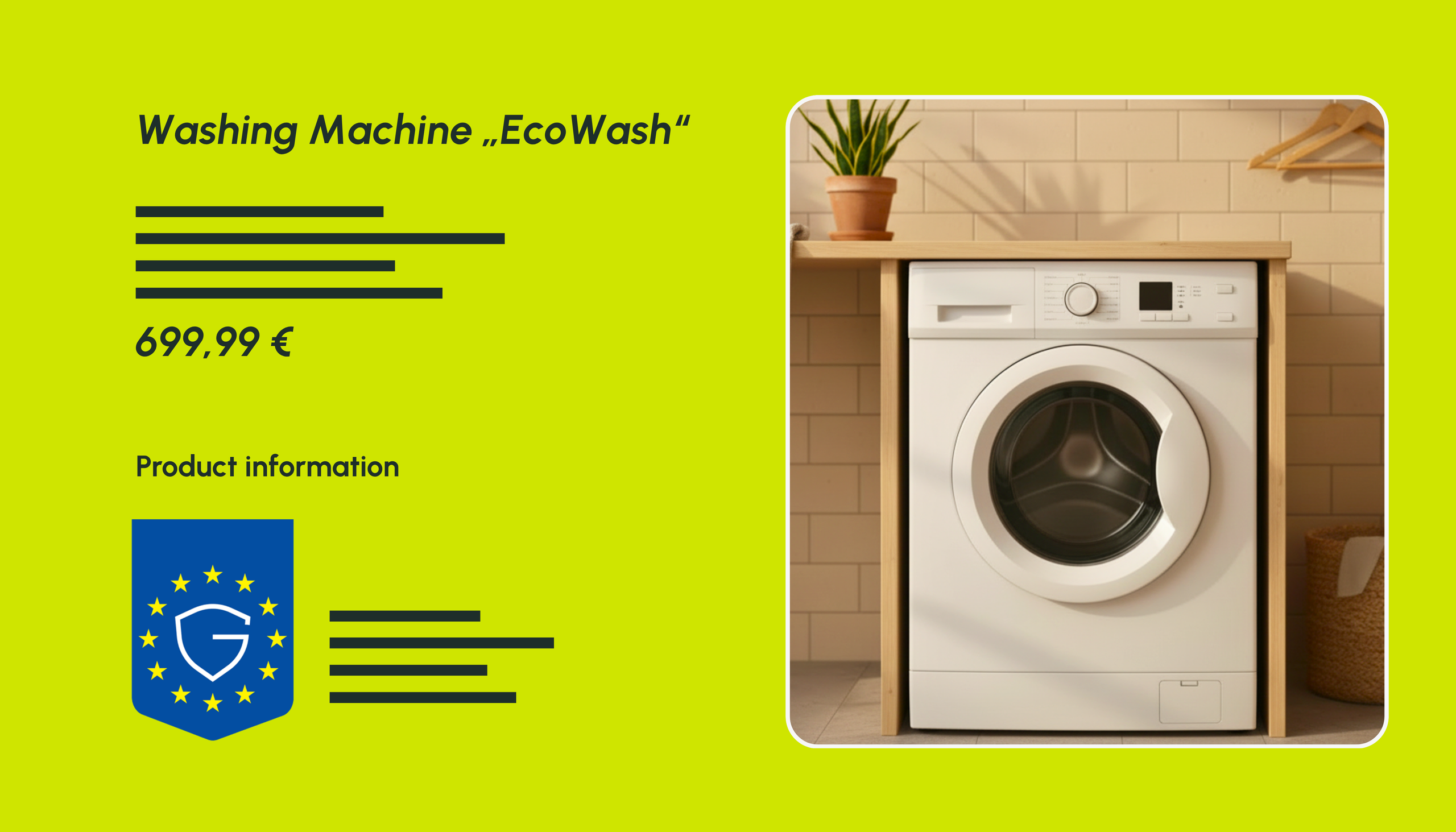
The legal basis: Where does the GARAN label come from?
The GARAN label is not an invention of individual marketplaces or shop systems, but the result of EU Directive 2024/825 (known as the EmpCo Directive), which is intended to ensure greater transparency at the European level regarding „empowering consumers“. The implementing regulation specifies exactly what the new labels should look like, what information they must contain, and where they should be placed – there is practically no room for discretion for retailers.
Important for understanding: There actually is two new labels that are often thrown into a pot.
- The warranty label (officially: „harmonized notice“) generally informs about the statutory warranty rights – two years for new items, one year for used items. It is provided for every Physical product obligation that is sold to consumers.
- The GARAN label (officially: „harmonized labeling“) is added only if the manufacturer grants a voluntary shelf life guarantee of more than two years without additional costs.
Both obligations apply regardless of the sales channel – that is, in your own online shop as well as on marketplaces, by email contract conclusion, or in traditional retail. These apply exclusively to B2C sales of physical products; pure B2B offerings, digital content, SaaS, and services are not subject to the new labeling requirement. Anyone who fails to comply with the requirements, or does so incorrectly, risks a legal warning from competitors, consumer protection associations, or competition authorities.
What exactly is the GARAN label?
The GARAN label is not a quality seal or certification that you can apply for a position. There is no „authority“ or testing process – the label is automatically generated or individualized based on three details:
- Brand or trademark of the manufacturer
- Model or model designation
- Warranty period in years
If there is no corresponding manufacturer warranty of two years, the GARAN label need not be displayed – however, the information obligation regarding the warranty label remains unaffected and still applies to all offers.
The marketplaces are preparing in so many different ways
A look at the major platforms shows that „the marketplace is already doing that“ is not a reliable assumption. For the label requirement, it is crucial who concludes the purchase contract with the consumers: that is usually you as a retailer, not the marketplace.
- At Kaufland and Advertisements The implementation largely runs automatically using the product data. As soon as manufacturers, model numbers, and warranty periods are entered in the seller portal, via CSV/XML or the Marketplace Seller API, the system generates the label itself. The downside: Without a fully-maintained attribute – in Kaufland, for example, the MPN – no label is displayed at all, regardless of whether the warranty actually exists.
- Amazon The company also wants to automate the display of product details on the product pages and requires structured catalog attributes for brand, model, and warranty period. However, an official, complete statement regarding the technical implementation has not yet been provided.
- Ebay Announces that it will automatically include the legal warranty information and that it cannot be changed by sellers. For the GARAN label, sellers must actively include the three mandatory product specifications as article characteristics – no later than September 24, 2026, offers can be edited accordingly. The exact location where the label will appear is currently unknown.
- Otto has signaled early on that it intends to implement the requirements, without yet confirming details regarding the technical design. Feedback regarding other marketplaces such as Temu or Vinted is still pending at this point.
What this means for you as a trader
Complete and consistent product data
The legal situation makes clear where the responsibility actually lies: Whoever posts an offer on a marketplace is liable to competitors and consumer protection for compliance with the information obligations – regardless of whether the platform completes its technical implementation in time. If the listing on the marketplace is delayed despite properly maintained data, it will not protect you from a legal action in the event of a delay.
For the practice, this means:
- Check data quality now. Are the brand, model designation, and warranty period for all relevant products fully maintained and in the correct format? These three attributes are what most marketplaces rely on to decide whether the label will even be displayed.
- Check the marketplace for marketplace by marketplace, not in a general way. The implementation differs greatly – manual entry in the Seller Portal, CSV/XML import, or API connection. Anyone who sells on multiple channels needs to create a separate inventory list for each marketplace.
- Early coordination of middleware and feed connections. When product data is transferred to the channels via a feed or marketplace management solution, it should be clear whether the necessary attributes are delivered correctly and in full.
- Don't forget the warranty label. The GARAN label only applies to products with a long manufacturer warranty – however, the obligation to display the warranty label applies to your entire range of physical products, regardless of a warranty.
- Documentation as a safeguard. Keep track of when and how you maintained the required data for each marketplace. This will make it easier to prove in a dispute that the missing listing is not your fault but that of the marketplace.
It is at this point that it becomes clear how closely product data quality, market place connectivity, and compliance are now intertwined. Those who maintain product data centrally and distribute it channel-specifically to multiple marketplaces have a significantly easier time keeping mandatory attributes such as brand, model, and warranty period up to date consistently across all channels – rather than having to maintain them individually on each marketplace.
How well are you prepared for this today? Request your setup check now and get personalized advice.
FAQ
Frequently asked questions about the GARAN label
The GARAN label is a standardized marking required by the EU that indicates to consumers that a manufacturer has voluntarily granted a shelf life guarantee of more than two years. It complements the new warranty label but does not replace it.
The warranty label informs about the statutory warranty rights and is mandatory for practically every physical product. The GARAN label is only added if the manufacturer offers a two-year shelf life guarantee. Both labels have different design requirements and are often displayed together but separately.
The only factor that is decisive is whether the manufacturer grants a shelf life guarantee of more than two years without additional costs for the entire product. There are no other quality or industry-specific criteria that need to be met.
It depends on the marketplace. Platforms like Kaufland or classified ads automatically generate the label. your product details. On other marketplaces, you must enter the mandatory information correctly yourself; uploading your own images is usually not required.
No. The GARAN label is not a certification and there is no body that „issues“ or audits it. It is created by you as a retailer (or automatically by the marketplace) based on the manufacturer’s warranty as soon as the requirement – more than two years shelf life guarantee – is met.
Legally, the seller is primarily responsible for ensuring compliance with information obligations – even if the technical implementation lies with the marketplace. Therefore, a thoroughly maintained data base is the most important safeguard.
The GARAN label is standardized and may only be adapted in terms of content to the brand, model, and warranty period – the shape, colors, and font are determined by the EU. If a displayed label differs significantly in appearance or the three mandatory details are missing, the implementation is likely to be incorrect. There is no additional external testing authority available.
Jan
Lead Marketplace
Jan combines sound marketplace experience with a strong understanding of brand management and sales. After several years in brand and sales management, he moved into the marketplace sector and has since been helping retailers and manufacturers successfully position their products on international platforms. At Channel Pilot Solutions, as Lead Marketplace, he is responsible for the further development of our marketplace portfolio and for consulting on technical processes, product data, and channel-specific requirements. His experience in various industries allows him to quickly identify the key levers for increased visibility and better performance.


 Deutsch
  English
  Español
  Français