Sophie
Amazon SEO: How to rank on Amazon
Imagine you’re selling a thermal mug on Amazon that’s really good: it’s sturdy, leak-proof, and keeps coffee hot for 12 hours. The reviews match the description, and the price is right—and yet you’re selling hardly anything. The problem: When someone searches for „thermal mug“ on Amazon, they first see ads. Next, they see products that Amazon considers likely to be worth buying. Your mug ends up in position 59, and hardly anyone clicks there anymore.
That is the core behind Amazon SEOOn Amazon, it’s not the best text or necessarily the best product that wins. It’s not the best text, but the product that the algorithm understands most safely.

What is Amazon SEO?
Definition:
Amazon SEO is the optimization of product pages so that they appear as high up as possible in the search results within Amazon. The goal is not to get clicks, but to make a sale.
Unlike Google, the goal is not to index websites. Amazon sorts Products. The ranking is not primarily based on relevance, but on the probability of a sale; the goal is to create a transaction rather than just providing information. This changes the way you think: you’re not writing a guide; you’re giving the right answers to a machine and eager buyers in seconds.
You should remember this:
- Purchase probability instead of text quality: Amazon first displays the products that are most likely to be purchased.
- Click-through rate and conversion rate: They are the most important signals. The click rate shows how often your product is clicked on, and the conversion rate, how often it is subsequently purchased.
- Keywords and behavior work together: Keywords determine where you are visible. Click and purchase behavior determine how high up you are.
- 75 characters for the title: Since July 27, 2026, this new upper limit applies in most categories.
Amazon SEO vs. Google SEO
| Google SEO | Amazon SEO | |
|---|---|---|
| Intent to search | Information, navigation, purchase | Almost always a purchase |
| Ranking based | Content, links, authority | Relevance to search and sales performance |
| Object | Websites, articles | Product detail pages |
| Most important levers | Content, Technology, Backlinks | Keywords in the listing, click and purchase behavior, product data |
| Text | Long and detailed often advantageous | Short, structured, decisive in purchasing decisions |
| Measures of success | Visibility, Clicks | Sales, conversion |
A good Google ranking is of no use to you on Amazon, and vice versa. These are two separate systems with different rules of the game.
How does the Amazon ranking work?
How your product ranks on Amazon is determined in two steps: First, Amazon filters out the products that match the search query (Relevance). Then Amazon sorts them according to how likely a purchase is (Performance).
Important:
Amazon does not publish a complete list of ranking factors or their weightings. Everything you read about individual factors, here too, is based on Amazon’s basic descriptions as well as on the experience and analyses of marketplace experts.
You control the relevance through your listing, and the performance through everything that brings buyers to click and buy.
Relevance: Does your product match the search?
Here, the text fields of your listing count: Title, article highlights or bullet points, description, and backend search terms. Additionally, structured product attributes such as material, size, color, or category are included.
Performance: Will your product be purchased?
Here, Amazon’s systems detect behavior. Particularly relevant are the following signals:
| Signal | What it means |
|---|---|
| Click-through rate (CTR) | How many people click on your product in the results list? |
| Conversion Rate | How many of them will you buy? |
| Sales Velocity | How frequently does the product sell out? |
| Reviews | Number and star rating as a sign of trust |
| Price and Availability | Competitive, available, stable in stock |
| Returns, Seller performance | Satisfaction and reliability |
Why visibility on the wrong keywords is harmful

An electric lawn mower that is marketed as a „gas lawn mower“ has a lot of range and hardly any customers. However, every click still costs money, the purchase decision is made elsewhere, and the marketplace registers both. Visibility is therefore not an end in itself. What matters is whether the right people see and buy your product.
The cause is rarely in the keyword itself. Most often it lies in the product data: a title that describes the product type vaguely, an attribute that is in the wrong context, or a category that does not fit on the marketplace. That is exactly where the problem lies. Product Data Optimisation Product information can be enriched, validated, and prepared appropriately for each channel before the product even enters the wrong search results.
The cycle: Those who are at the top sell more
Amazon SEO is a self-reinforcing system. A better position brings more clicks, more clicks lead to more sales, and more sales improve the position. Conversely, it is also true: Those who are not visible often sell little and continue to slip down the ranks. Therefore, small improvements at the beginning often have a big effect.
Keyword researchWhat are your customers looking for?
Without the right search terms, you won't be found. But you don't need expensive tools to get started.
These are the best sources for your Amazon keywords:
- Amazon Autosuggest: Type your product term into the search bar. The suggestions are based on real search queries. Add words gradually („Large Thermos Cup“, „Leak-proof Thermos Cup“) to find long-tail terms.
- Search Query Performance Report (Seller Central): Displays impressions, clicks, and purchases per search term compared to the overall market. These are actual Amazon data, not estimates.
- Own campaign data: Which search terms actually lead to purchases in your ads? There, an organic ranking is also worthwhile.
- Competitors and reviews: What terms do your competitors and customers use? Reviews reveal which words the audience really uses.
- External tools: Services like SISTRIX, Helium 10 or Sellerfox provide additional ideas that you should check out on Amazon.
Main, secondary, and longtail keywords
Not every keyword has the same purpose. Anyone who distinguishes between the three types knows what goes in the title and what is better placed in bullet points or attributes.
- Main keyword: The term, with which customers directly refer to your product, in our case „thermobecher“. It tells Amazon and buyers in one word what it is about. That is why it is at the beginning of the title.
- In addition to keywords: Synonyms and variations such as „insulated cup“ or „coffee cup to go“. They attract people who call the same product by different names. They should be included in bullet points, descriptions, and backend search terms so that the title remains readable.
- Longtail keywords: Longer search phrases like „500 ml thermal mug leak-proof“. People who search like this usually already know exactly what they want and are more likely to buy. The search volume is lower, and the competition is often also low. These terms fit into bullet points and product attributes.
There is a limit: A longtail keyword that practically no one types in will not bring you any visibility. Therefore, check whether the term fits a real search query, for example through the Autosuggest suggestions or the Search Query Performance Report.
That Optimizing listings: Title, highlights, pictures and more
Now it gets concrete. Each element of your listing has two tasks: it must fit into the search and it must convince buyers.
Title and article highlights: Explains what the product is and why you should buy it
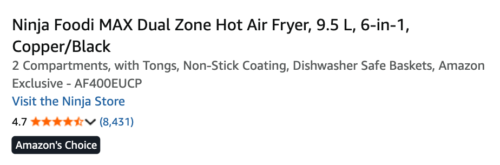
The title is your strongest keyword field. In most categories, it can be no longer than 75 characters since July 2026. Anything beyond that belongs in the article highlights, which can be up to 125 characters. You can learn how to build the title in our article. „Optimizing product data for Amazon and eBay“.
For Amazon SEO, the division of tasks is paramount: The title tells what the product is. The highlights tell why you should buy it. Therefore, the main keyword appears after the brand in the title, and the arguments flow into the highlights.
- Title (54 characters): Nordlicht Thermos cup 500 ml stainless steel, leak-proof
- Article highlights (82 characters): Keeps drinks hot for 12 hours, fits standard drink holder, dishwasher safe
Both fields are searchable. The important thing is that a search term appears in one of the two fields.
Bullet Points: Use before a feature
Don’t just describe what your product has; describe what customers have from it. „Stainless steel, 500 ml“ is a feature. „Keeps drinks hot for 12 hours“ is a benefit. Start with a brief description, then mention the included accessories and unique selling point, and finish with dimensions, material, and origin. Keep it short and avoid emojis and special characters.
Product images: The click occurs in the image
In the results list, you compete directly with all other products. The main image, title, price, reviews, and delivery information are visible. The main image is the first impression, and it must be impressive. Amazon guidelines fulfill.
Product description and A+ content
Anyone who scrolls down to the product description wants to know: Is the product really the right one? Here you have room for what title and bullet points don’t cover. Use it to show why your product is better than others.
With A+ Content, this goes beyond pure text. That’s what the expanded product descriptions from Amazon are called. You combine images, infographics, comparison tables, and text modules into a kind of mini landing page within the listing. A table that compares your thermos with two other sizes answers questions before customers ask them. To do this, you usually need a brand registered with Amazon.
This primarily works through conversion: Those who answer open-ended questions sell more. And because conversion is a key ranking signal, A+ content indirectly also strengthens the position.
Backend search terms
In the backend, you record synonyms, alternative spellings, and niche terms that do not appear in the visible text. Do not repeat terms from the title and highlights; they do not add any additional value there. Observe the length limits set by Amazon.
Reviews, price and availability
These three factors are only partially in your hands, yet they decide with just a click and a purchase. An attractive price makes buyers more likely to click on the listing. Good reviews give them the confidence to buy. And a product that is often not available loses space to make room for other products that can be sold.
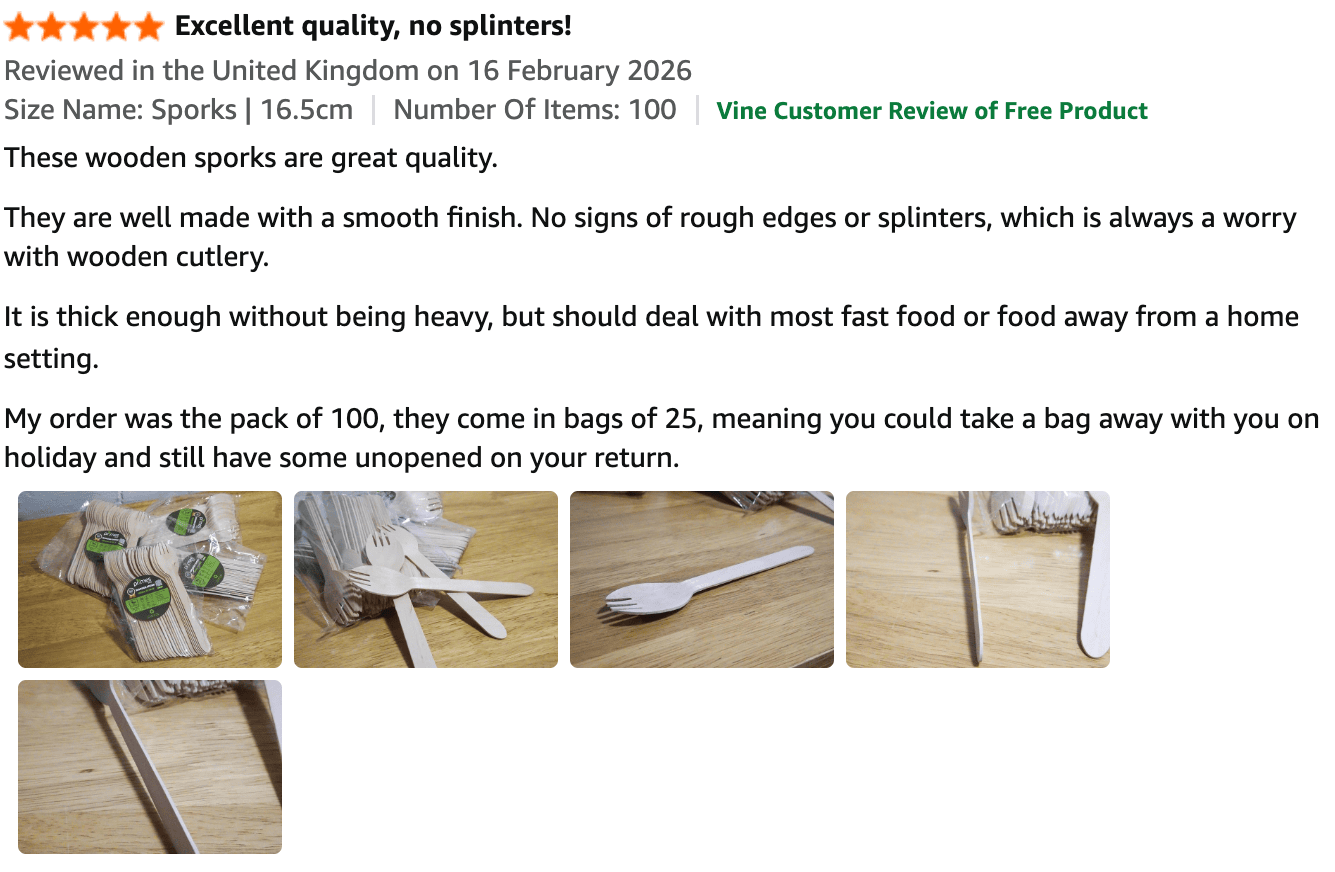
There are no shortcuts when it comes to reviews. Reviews for money, discounts, or free products are prohibited. Amazon deletes them and may, in the event of repeated violations, suspend the seller account. The only official exception is Amazon Vine: Selected reviewers receive products free of charge, and the review is marked accordingly.
The underestimated basis for Amazon SEO: Product data and attributes
Most guides stop at the listing text. Beneath the text lies a second level that is becoming increasingly important: structured product data.
Every product on Amazon consists of fields: category, brand, material, color, size, dimensions, target audience, scope of delivery, and many more. This dataset determines whether your product appears in filters, whether it fits into search queries, and whether Amazon's systems understand it correctly.
Typical data errors that cost visibility:
- Missing or incorrectly filled attributes
- Incorrect categories
- Conflicting elements between title, bullets, description and attributes
- Inconsistent spellings of the same property (for example, „stainless steel“, „stainless steel“, „V2A“)
- Outdated information, for example measurements that were not updated after a product change
Amazon SEO for large assortments: How to do it Feed Management Tool helps
Companies that sell many products rarely maintain data directly in Amazon; they often store it in a shop, ERP, or PIM system and then pass it on to marketplaces. A feed management system sits in between: it combines data from various sources, prepares it with rules, and plays it out appropriately for each target channel. That is the task of Channel Pilot Pro. With rules, for example, you can build titles based on fixed patterns of brand, product type, and characteristics, and unify attributes. AI Formula Generator it turns simple prompts into complex formulas, and the AI Category Mapping automatically sorts products into the appropriate marketplace categories.
How Channel Pilot Pro works in practice,
We are happy to show our experts in a personal demo.
Amazon SEO and Amazon Ads: First the listing, then the advertising
Amazon Ads can boost your ranking, but only if the page is convincing. Whoever first activates advertising buys clicks for a product that no one is buying. Therefore, there is a fixed order for Amazon SEO and Amazon Ads:
- Fix the listing and product details. The title, highlights, images, and attributes must be correct before you spend any budget.
- Targeted advertising. Focus on keywords that are relevant to your product and where purchases are realistic.
- Monitor the Amazon ranking. Keep an eye on your products and adjust them as needed.
ACOS and TACoSTwo key metrics that you should distinguish between
Both metrics answer the same question: How much do you spend on advertising compared to what you receive in return? The difference lies in how you compare the costs.
- ACOS (Advertising Cost of Sales): You divide the advertising costs by the revenue generated from ads. It shows whether a single campaign is worth it.
- TACoS (Total Advertising Cost of Sales): You divide the advertising costs by your total sales, that is, ads and organic sales combined. It shows how much advertising is straining your overall business.
A hypothetical example: You spend 100 euros on ads per month. You then sell products for 500 euros. In total, you spend 2,000 euros.
- Your ACoS is 20 percent (100 of 500 euros).
- Your TACoS is 5 percent (100 of 2,000 euros).
For both of them, the lower the value, the less your advertising costs relative to your sales. If the TACoS drops, even though you continue to turn on advertising, your organic revenue is likely to grow., That is the revenue generated without display ads. This is a good sign for your ranking. However, if the majority of your revenue comes from ads on a consistent basis, this is a warning sign: then the organic relevance of your product may not be sufficient.
Alexa for Shopping (formerly Rufus), AI and GEO: When customers ask questions instead of using keywords
Buyers on Amazon are increasingly asking for whole questions: no longer „dog leash for large dogs“, but „which dog leash is suitable for a strong dog that pulls hard?“. Since November 12, 2026, a new AI assistant is also answering such questions in Germany: Alexa for Shopping – free of charge, without Prime, directly in the Amazon Shopping app and on Amazon.de.
Alexa for Shopping replaces the current shopping assistant Rufus Ab, which has been running as a beta in Germany since autumn 2024. The assistant combines the product knowledge of Rufus with the personal context of Alexa+, compares products and shows price trends.
With that, Amazon has its own AI answer machine, and anyone who wants to be recommended there operates there. GEO. What lies behind it:
Definition GEO:
Generative Engine Optimization (GEO) refers to the optimization of content so that it can be found, understood, and cited in AI responses (ChatGPT, Gemini, Alexa for Shopping, and others).
What this means for your listing:
- Attribution becomes ranking material. Corrected, complete attributes are the key to appearing at all in AI-based search queries: What cannot be cleanly extracted by machine cannot be recommended either.
- Answer real customer questions. Anyone who only optimizes for keywords is underrepresented when formulating questions. Think like in a retail store: what would customers ask there? Answer it in the text, in the highlights, and in the images.
- Be consistent. The title, highlights, description, and attributes should all say the same thing. Contradictions make any single statement unreliable.
- Take care of your reviews. Alexa for Shopping incorporates reviews into its responses.
The good news: Anyone who has built their listing in a clean manner according to classic principles is already working in the right direction.
And outside of Amazon? AI is now also helping with shopping there. Part of the purchasing decision is already made before someone even opens the Amazon app: shoppers are being recommended and compared products by ChatGPT, Claude, or Gemini. Agentic CommerceAI agents research, compare, and sometimes even buy products independently. How this works, you can read in our article. What is Agentic Commerce?
Tools, agency or do it yourself?
Many people search for „Amazon SEO Tool“ or „Amazon SEO Agency“. Which solution is the right one depends on three questions: How many products do you have? How much time do you have? Where is your bottleneck?
| Option | It fits if… | Boundaries |
|---|---|---|
| Make it yourself | You have few products and bring time with you | Time investment and knowledge need to be built up |
| Keyword and ranking tools (e.g. SISTRIX, Helium 10, Sellerfox) | You want to measure search terms and rankings | Tools show problems, but they do not fix them |
| Agency | You need strategy, content, graphics, and ads from a single source | Costs, coordination effort, limited scalability for large catalogs |
| Feed Management Tool / Product data optimization (e.g. Channel Pilot Pro) | You have many products and want to prepare data for Amazon and other channels on a regular basis | It does not replace a keyword strategy or image design |
The truth: In practice, traders combine several components. Tools provide insights, agencies and teams bring strategy, and a solid data base ensures that both of these things are delivered on a large scale.
Measuring success: These metrics count
Amazon doesn't show you your organic position directly. So you need your own measurement points:
| Indicator | Where can you find them? | Why it matters |
|---|---|---|
| Organic position per target keyword | Ranking tool (daily tracking) | Shows whether the measures are effective |
| Click-through rate (CTR) | Advertising Console, Search Query Performance Report (SQPR) | Rated main image, title, price |
| Conversion Rate | Seller Central reports, SQPR | Evaluated page content and trust |
| Organic-to-paid ratio | Calculate yourself | Shows dependency on advertising |
| Attribute completeness | Custom data analysis, Feed Tool | Missing attributes cost visibility: in filters, in search, and in AI recommendations |
The most common mistakes in Amazon SEO
These errors cost visibility and budget:
- Keyword stuffing in the title: With 75 characters, there is no more room for enumerations. The title must remain readable and invite clicking.
- Outdated rules. Anyone who still works with 200-character titles risks Amazon replacing them with its own AI suggestions.
- Advertising without convincing listing: You pay for clicks that don't result in a sale.
- Only the conversion rate in focus: The main image remains untouched for years, even though the click rate also contributes to the ranking.
- Visibility on inappropriate keywords: Anyone who clicks but does not buy will worsen their click and purchase rates.
- Incomplete or contradictory attributes: Then your product is missing from filters and in AI recommendations.
- No tracking, no maintenance: Anyone who doesn’t measure doesn’t realize until months later whether something has worked. And anyone who stops optimizing after the first optimization loses track, because search behavior and competition change.
Conclusion: Amazon SEO is data utilization with attitude
Amazon SEO is not a text-based topic. It’s about getting people to click on your product and then buying it. Everything else, from keywords to images and A+ content to attributes and campaigns, serves these two goals.
With AI, an old foundation becomes more important: clean, complete and consistent product data. They decide whether Amazon correctly understands a product, whether it appears in filters, and whether AI assistants can recommend it. In the case of a few products, it is hand-made; in the case of many, it becomes a bottleneck.
Here we begin. With Channel Pilot Pro You combine product data from various sources, optimize it with rules, and adapt it for Amazon, just as you do for 2,500+ other sales channels such as ChatGPT and Google Shopping, including 180+ marketplaces. You maintain title, attribute, and category data centrally once, instead of manually doing it thousands of times, and you keep an overview of the data quality across all channels.
Do you want to see what it looks like for your catalog?
Book a demo now and go through product data together with Amazon.
Frequently asked questions about Amazon SEO
Amazon first filters products that match the search criteria and then sorts them according to their likelihood of being purchased. Important signals are click-through rate, Conversion Rating, sales, reviews, price and availability. Amazon does not publish a complete weighting.
Since July 27, 2026, a limit of 75 characters including spaces applies in most categories; media such as books and music are excluded. Additional information is included in the article highlights, with up to 125 characters. The style guide for your category is the governing factor.
Start with Amazon Autosuggest and the Search Query Performance Report in Seller Central. Add your own campaign data, competitor listings, and customer reviews. Choose terms with clear intent to buy and make sure they really fit your product.
There is no one-size-fits-all number. Amazon Ads works like an auction: you pay per click, and the price depends on category, competition, and keyword. Therefore, the price varies greatly. Plan your budget per keyword and according to your margin. For beginners, automatic campaigns are often sufficient. With them, you can find out which search terms actually lead to purchases.
No, Amazon does not charge a fee for this. However, a registered brand with Amazon is required (Brand Registry). The trademark registration itself and the creation of the content cost money and time. Premium A+ content with videos and interactive modules is also free under certain conditions, for example with a published brand story on all brand-owned offerings. Check the current criteria in Seller Central.
Changes to titles and images can have an immediate impact on click rates and rankings. A targeted ranking build, on the other hand, takes several weeks because Amazon needs to collect sufficient click and purchase signals.
Sophie
Content & Social Media Marketing Managerin
Sophie writes about e-commerce, digital retail, and everything related to marketplaces. She tracks trends, analyzes developments, and breaks down even complex topics in an easy-to-understand way. As a trained editor, she brings a keen sense of language, storytelling, and target audiences—and applies these skills today in content and social media marketing at Channel Pilot Solutions. When she’s not brainstorming new content ideas, she loses herself in a good TV series or works up a sweat exercising.